
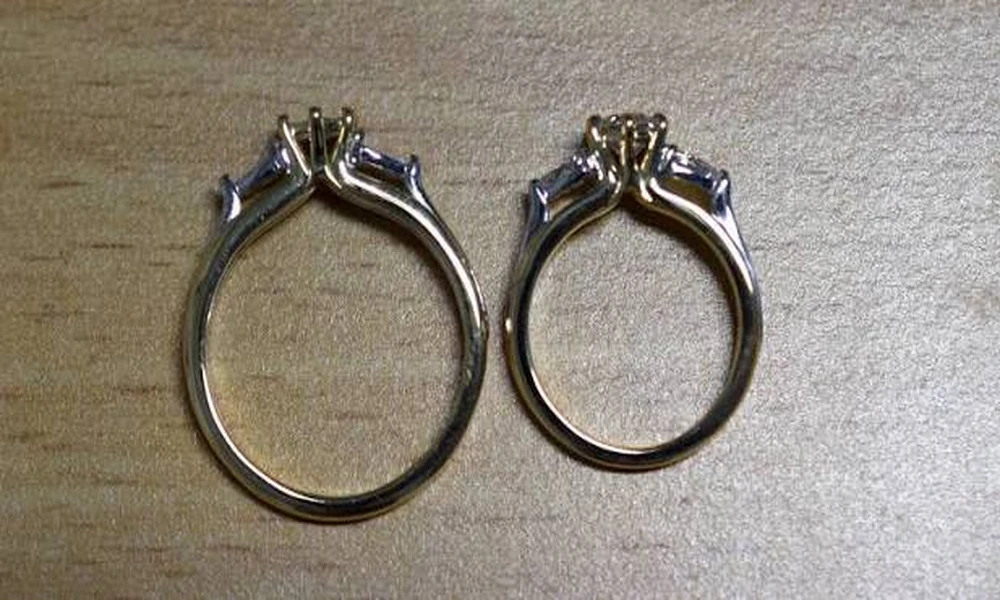

Three sizes off. That’s how far the average person misses their true ring size when they guess, and it’s the reason a beautiful band can turn into an expensive problem. The good news is that most rings can be adjusted. The catch is that “most” leaves out a whole family of metals and settings that resist the process, and no salesperson is going to volunteer that unless you ask.
So ask. Before you hand over a card, you want to know whether the ring you’re eyeing is workable down the line. This isn’t just about fit, either. It’s about whether the design can survive a torch, a saw, and a laser without losing stones or thinning to the point of cracking. If you’re local to Oklahoma and want a shop that handles this every week, you can resize jewerlry in Tulsa, Ok through an established jeweler who will tell you straight whether the piece is a candidate. But before that conversation, learn the questions worth asking. Here’s what actually determines whether a ring can be sized.
What makes a ring resizable in the first place?
The short answer: metal type, setting style, and how much metal the shank has to give. A plain gold band is the easiest thing in the world to size. A channel-set diamond eternity band is close to impossible. Everything else lives somewhere between those two poles, and the deciding factor usually comes down to whether a jeweler can cut the shank without disturbing stones.
The shank is the part of the ring that wraps around the underside of your finger, and it’s the only real estate a jeweler has to work with. If the shank is solid and unadorned, there’s room to cut, add metal, and weld it back. If the shank is lined with stones all the way around, cutting it means cutting through a setting, and that’s where traditional resizing stops.
Metal matters just as much. Gold, platinum, and silver all solder predictably, which is why jewelers can make the seam disappear. Titanium, tungsten carbide, and stainless steel are a different story. Those metals resist heat and soldering in ways that make a clean, invisible repair nearly impossible, so most shops won’t touch them. If you’re shopping a tungsten band online, know that your size is permanent.
The resizing range, and why 1 to 3 sizes is the sweet spot
Here’s a rough rule I’ve seen hold up across a lot of repairs: a ring can usually go up or down by one to three sizes before the structure starts to suffer. Past that range, the shank thins, the prongs shift, and the ring loses the shape it was built with. Sizing a ring down five sizes might technically work, but the metal gets compressed and the setting can warp.
If you’re between sizes, buy the larger one. Taking a ring in is almost always cleaner than taking it out, because sizing down removes metal and sizing up requires adding it. Adding requires matching the original alloy, and matching an old gold tone isn’t always perfect. A good jeweler can get close, but close is the ceiling.
This is also why you should size before you buy when you can. A shop that knows the ring’s origin can order it in your size, and an original factory fit beats any repair, no matter how skilled the hand doing the work.
A quick look at the four methods jewelers actually use
Understanding the process helps you evaluate what a quote is worth. Here’s the practical landscape.
- Stretching. Fast, but it thins the metal and weakens the ring. Most reputable jewelers avoid it for anything you care about long term.
- Compressing. Used on plain wedding bands. The ring is pressed inward to a smaller diameter with no metal added or lost. Neat, but limited to bands with no stones.
- Cutting and adding or removing metal. The standard method. The jeweler cuts the shank, adjusts, then solders it back together, ideally with a laser welder for a clean seam.
- Replacing the shank entirely. Used when the metal has worn too thin to safely work. More expensive, but it restores a ring instead of patching it.
If a shop only offers stretching and won’t discuss the other options, that’s a signal. Real resizing involves a real conversation about the metal and the setting.
Rings that resist resizing, and what to do instead
Some pieces just won’t cooperate. Full eternity bands (diamonds all the way around) are the classic example, because there’s no plain shank to cut. Titanium, tungsten, and stainless steel resist soldering. And any ring with a highly intricate or delicate setting risks damage when heat and pressure enter the picture.
In those cases, you have options. A jeweler can add sizing beads or a sizing bar to the inside of the band, which takes up a little space and keeps a loose ring from sliding. You can also have the ring remade in your size, or set with a different band if the ring’s design allows it.
| Ring type | Resizable? | Best approach |
|---|---|---|
| Plain gold or platinum band | Yes, easily | Standard cut and solder |
| Diamond engagement ring | Usually | Cut and solder, protect prongs |
| Full eternity band | Rarely | Sizing beads or remake |
| Titanium or tungsten band | No | Buy the correct size or replace |
| Rings with a delicate setting | Sometimes | Case-by-case evaluation |
How to check a ring’s resizability before you commit
You don’t need to be a jeweler to spot a problem piece. Use this as a quick pre-purchase checklist.
- Look at the shank. If the bottom is plain metal, you’re in good shape. If stones run all the way around, ask about alternatives.
- Ask what the metal is. Gold, platinum, and silver size well. Titanium, tungsten, and stainless steel usually don’t. Sometimes it’s stamped inside the band.
- Check the setting type. Prong-set stones are easier to work with than channel-set or flush-set stones, which sit lower and closer to the cut line.
- Ask about a warranty. Some jewelers offer a service plan that covers resizing. If you’re already paying for maintenance, use it.
- Buy the larger size if you’re between sizes. Sizing down is usually cleaner and sometimes cheaper.
- Get the turnaround in writing. A standard resizing typically takes a few business days, but a complicated piece or one that needs a new shank can take longer.
One more thing: ask whether the jeweler uses a laser welder. It’s not a guarantee of quality, but it does reduce heat exposure on stones, and that matters if you’re working with a ring you love. According to the Gemological Institute of America, stone setting and metalwork both affect how a piece withstands wear over time, which is why a careful approach beats a fast one.
Why the metal source matters more than you’d think
A ring is only as stable as the alloy it’s built from. Gold purity affects how the metal behaves when heated, and different alloys have different working properties, which is why a jeweler wants to know exactly what they’re working with before they cut into your band. The U.S. Geological Survey tracks mineral commodities including gold and platinum, and the long-standing supply and composition data around those metals is part of why jewelers can match alloys as well as they do.
This is also why I’d hesitate to buy a resizable ring from a seller who can’t tell you the metal content. If the shop doesn’t know the alloy, it can’t match it, and a mismatched seam on a ring you wear every day is the kind of thing you notice forever.
The one thing to do before you buy online
Online ring shopping makes sizing feel like an afterthought, but it’s the single biggest reason rings get returned. Measure your finger at the end of the day, when it’s largest, and measure it more than once. If the seller offers a resizable metal and a plain shank, you have room to correct a mistake. If not, get the size right the first time.
One thing worth knowing about gemstone durability in general: not all stones tolerate heat, and the Gübelin Gem Lab maintains reference material on gemstone treatments that can affect how a stone responds to the heat of a repair. If your ring holds a stone you’re unsure about, mention it before anyone picks up a torch.
Final thoughts
Resizing is one of the most common jewelry services for a reason: bodies change, hands change, and rings get handed down. The trick is to know what you’re buying before it becomes a problem. Check the shank, ask about the metal, and buy the larger size if you’re between two. Those three habits will save you more money than any sale will.
Before you buy your next ring, ask one question: if this didn’t fit, could it be fixed? If the answer is no, you may want a different ring.