
Three days. That’s roughly how long the food in your fridge survives after an outage knocks out power, and it’s also about how long most families last before the novelty of candlelight wears off. I’ve watched neighbors in Vermont run extension cords across icy driveways to borrow a few amps from a portable unit, and I’ve watched others sit in the dark for a week because they never got around to asking a single question about backup power.
Here’s the promise: by the end of this piece, you’ll understand how a home generator actually works, how to size one without guesswork, which fuel type fits your property, and what a real installation involves from the first site visit to the first flicker of the transfer switch. You’ll also know the mistakes that send homeowners back to the drawing board after they’ve already written a check.
What Actually Happens During an Outage
When the grid drops, your house doesn’t just lose lights. It loses the furnace blower, the well pump, the sump pump, the refrigerator compressor, the router, and every medical device plugged into a wall. A standby generator doesn’t restore the grid. It creates a small, private grid of your own, and it does that automatically, usually within seconds of detecting the outage.
The magic lives in a component called the transfer switch. This is the piece most homeowners have never heard of and the one that matters most. Without it, your generator would backfeed electricity onto utility lines while crews are working on them. That’s not a minor code issue, it’s a life safety issue. The National Fire Protection Association publishes the electrical and life safety codes that govern how that transfer equipment gets installed and inspected, which is why a permitted, inspected install is non negotiable.
Once the switch flips, your generator carries whatever circuits you’ve assigned to it. Maybe that’s the whole panel. Maybe it’s eight essential circuits and nothing else. The difference in cost between those two answers is substantial, and it’s the first real decision you’ll make.
Whole Home, Essential Circuits, or Portable?
You’ve got three realistic paths, and they solve different problems.
- Portable generator: Cheapest upfront, loudest, requires manual setup, fuel runs, and cord management in bad weather. Fine for short outages and a couple of appliances.
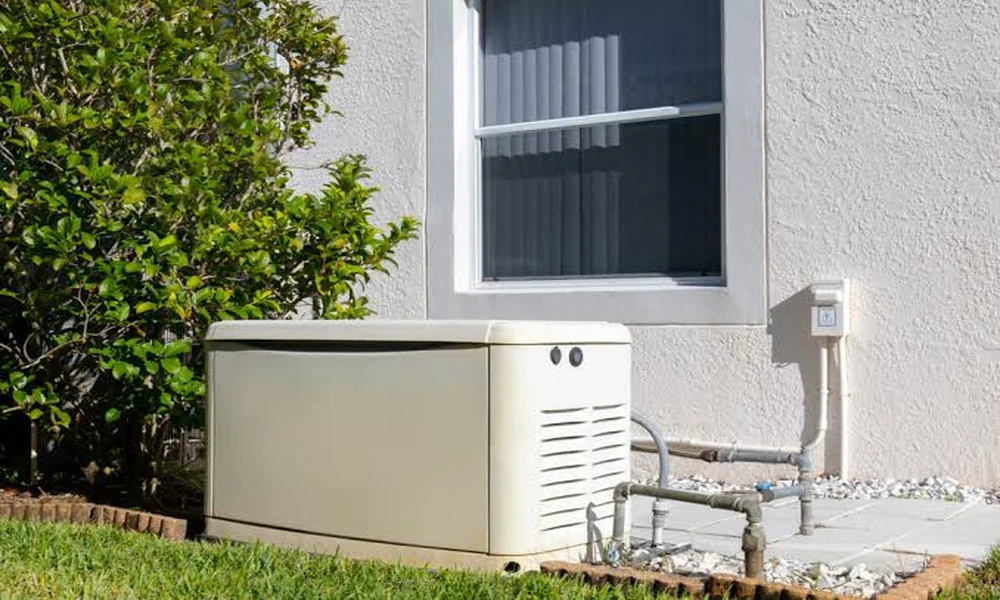
- Standby with essential circuits: Runs on natural gas or propane, starts itself, powers the loads you choose. This is the sweet spot for most families.
- Whole home standby: Powers everything, including central air and electric ranges, and costs the most. Worth it if you have medical equipment, a home office that can’t go dark, or a well and septic system that stop working without power.
I’d pick the essential circuits route for a typical suburban house and go whole home only if someone in the household depends on powered medical equipment. That’s a judgment call, not a rule, but it keeps you from paying for capacity you’ll never use.
How to Size a Generator Without Guessing
Sizing isn’t a matter of matching square footage. It’s a load calculation, and it comes down to a few practical steps you can walk through before anyone shows up at your door.
- List every appliance and system you want running during an outage.
- Note the running watts and the starting watts for each. Motors and compressors draw a big surge at startup.
- Identify which loads run simultaneously. Your well pump and furnace blower may kick on together.
- Add the running watts, then add the largest single starting surge on top of that total.
- Compare the result against the generator’s continuous and surge ratings, not just its peak marketing number.
Most homeowners get this wrong because they eyeball the biggest number on a spec sheet. The label on the box is a peak figure. Continuous output is what actually keeps your house running at 2 a.m. on day four.
Fuel Choices and What They Mean for Your Property
Natural gas is the easiest answer if you already have a line. No deliveries, no tank, no refill anxiety. Propane works well where gas isn’t available, but you’ll need a tank sized for a multi day run, and you’ll want to know your burn rate at half load before you commit. Diesel and gasoline units exist, but storing fuel long term comes with its own headaches.
There’s a second layer here that people miss: the grid itself. The U.S. Department of Energy tracks how outages and grid strain shape household energy decisions across the country, and the trend line runs in one direction. Homes are carrying more electrical load than they did a decade ago while the distribution system ages. Backup power stopped being a luxury item somewhere along the way.
Weather drives the rest. The National Weather Service issues the storm warnings that keep Northeast homeowners awake in February, and winter storms remain one of the most common causes of prolonged outages in this region. If you live where ice accumulates on power lines, you already know the pattern.
What Installation Day Actually Looks Like
If you’ve never been through this, the process is more involved than dropping a box next to the house. Expect a site evaluation first, where someone measures your actual consumption and emergency needs rather than asking you to guess. From there you’re looking at a concrete pad or composite base, gas line work, electrical conduit, the transfer switch, a permit, and an inspection.
Permits and inspections vary by town, which is why local experience matters more than a national brand name. A crew that has pulled permits in your county knows what the inspector wants to see and how long the queue runs. That’s also where a company like Brook Field Service earns its keep, since generator installation by Brook Field Service covers the whole chain from the free site review through the final inspection instead of handing you a unit and wishing you luck.
After the install, you’ll want a maintenance rhythm. Run the unit under load periodically, check the oil, keep the battery charged, and test the transfer switch so you’re not discovering a dead starter on the night you need it. Remote monitoring has made this far easier. A generator that texts you about a fault before the storm hits is worth the small monthly cost.
Mistakes I’d Warn a Friend About
Oversizing to feel safe and then paying for fuel you never burn. Skipping the permit and discovering it at resale. Putting the unit where the exhaust blows into a window. Forgetting that a generator needs airflow and clearance. Buying on price alone from whoever answers the phone first.
None of those are exotic failures. They’re the ordinary ones, and they’re all avoidable with a site visit and an honest load calculation.
Frequently Asked Questions
How long does a standby generator run on a full tank?
It depends on the load and the fuel, but a properly sized propane tank can carry a household through several days at partial load. Ask your installer for the burn rate at your expected draw before you sign anything.
Can I install one myself?
You can physically bolt one down. You can’t legally skip the permit, the transfer switch wiring, or the inspection in most jurisdictions, and you shouldn’t want to.
Will it raise my property value?
It’s a resilience purchase, not a renovation. Buy it because you want the lights on, and treat any resale benefit as a bonus.
Where to Start This Week
Pull your electric bill and your panel schedule. Write down the four things in your house that absolutely cannot go dark. Then book a site evaluation and let someone who does this daily turn your list into a real number. The storm doesn’t announce itself, and the best time to sort out backup power is a sunny afternoon when nothing’s wrong. What’s the one circuit in your home you’d refuse to lose?