
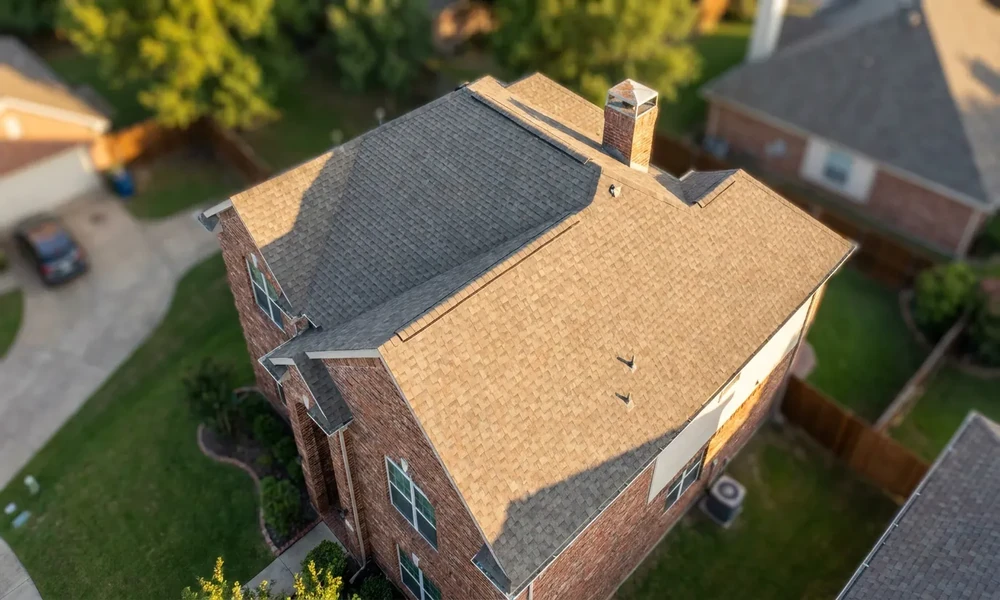

The renewal packet usually shows up looking like every other year’s. Same insurer, similar premium, a few pages of fine print nobody reads. Somewhere in those pages, though, a lot of homeowners in Frisco’s older subdivisions are finding a new line about roof age, and it changes what a hailstorm would actually cost them.
Much of the city was built fast during the growth years, and thousands of homes still wear the shingles the builder put on. A roof that went up with the house is now old enough for many carriers to stop treating it as a full value asset. That shift turns the decision about when to replace from a question of leaks into a question of money.
Homeowners trying to make sense of that decision often lean on people who handle both sides of it daily. A family owned outfit on 3rd Street with a 4.9 star Google rating across more than 300 reviews, High Performance Restoration has spent years guiding clients through storm claims and roof replacement in Frisco, along with solar and window work for homes across Collin County. The pattern its crews see most is simple. People learn how their policy treats an old roof only after the storm has already passed.
The Math Behind a Depreciated Roof
Two coverage types sit at the center of this. Replacement cost value pays what it costs to put a comparable roof on today. Actual cash value pays that amount minus depreciation, and roofs depreciate every year they sit in the Texas sun.
Picture a hypothetical home with $450,000 in dwelling coverage and a 2 percent wind and hail deductible. A full replacement is quoted at $24,000. Under replacement cost coverage, the owner pays the $9,000 deductible and the insurer covers the rest. Under actual cash value on a twelve year old roof depreciated by half, the insurer starts from $12,000, subtracts the same $9,000 deductible, and sends a check for $3,000. Same storm, same house, a $12,000 difference in what lands in the owner’s account.
Real numbers vary by carrier, roof type and age schedule. The point is that the roof’s birthday matters almost as much as the hail.
Lines Worth Finding Before the Sky Turns
The Texas Department of Insurance notes that some policies pay less for older or worn roofs and that a roof in poor condition may not be covered at all. Finding out which camp you sit in takes ten minutes with the declarations page and a phone call to your agent. A few terms deserve a direct look.
- Roof payment schedule. This endorsement pays a shrinking percentage of the roof’s cost as it ages, regardless of what the rest of the policy says.
- Percentage deductible. Wind and hail deductibles are often a share of dwelling coverage rather than a flat figure, which means rising home values push them higher without anyone noticing.
- Cosmetic damage exclusion. Some carriers will not pay for dents or marks that do not let water in, which matters most for metal roofs.
- Ordinance or law coverage. Code upgrades required during a reroof, such as drip edge or replacing deteriorated decking, may only be covered if this endorsement is on the policy.
When Replacing Early Beats Waiting for Hail
Plenty of homeowners hold off on an aging roof in hopes that a storm will cover the bill. Once the policy has moved to actual cash value, that bet loses most of its appeal. Paying for a replacement on your own schedule can reset the roof’s age in the insurer’s eyes, sometimes bring coverage back to full value at the next renewal, and open the door to premium credits if the new material carries an impact rating.
The roof usually signals when its time is near. Granules collect in gutters and at downspout outlets. Shingles turn brittle and crack when lifted rather than flexing. Tabs curl at the edges, and the field looks patchy in low afternoon light. An insurer’s own inspection photos, often taken from the street or by drone, can also flag a roof before the owner ever notices.
Timing around other projects matters too. Anyone planning solar should finish the roof first, because removing and reinstalling panels on a worn roof a few years later adds labor and a separate permit to the bill.
What a Clean Replacement Leaves Behind
A finished job should produce a paper trail, not just new shingles. Frisco requires a permit for a full reroof and a final inspection before that permit closes, so ask for the permit number and the inspection result. Beyond that, keep the following in one folder.
- The signed contract with the full scope written out, including decking and ventilation.
- Photos of the bare deck after tear off and any boards that were replaced.
- Manufacturer warranty registration, which some brands require within a set window.
- The final invoice and proof that you paid your deductible.
That folder answers an underwriter’s questions at renewal, supports any future claim and reassures a buyer when the house eventually sells.
Shortcuts That Cost More Later
Texas does not license roofers at the state level, so the burden of vetting falls on the homeowner. Offers to cover or waive the deductible are illegal, and anyone making them is signaling how they plan to handle the rest of your claim. Large payments before materials arrive, contracts with blank sections and pressure to sign during the first knock after a storm all point the same way. A local address, proof of insurance and a willingness to explain the policy alongside the estimate say far more than any yard sign.
An old roof does not fail all at once. It slips out of full coverage first, often without a single leak, and the homeowners who notice that early are the ones who get to choose their own timing.